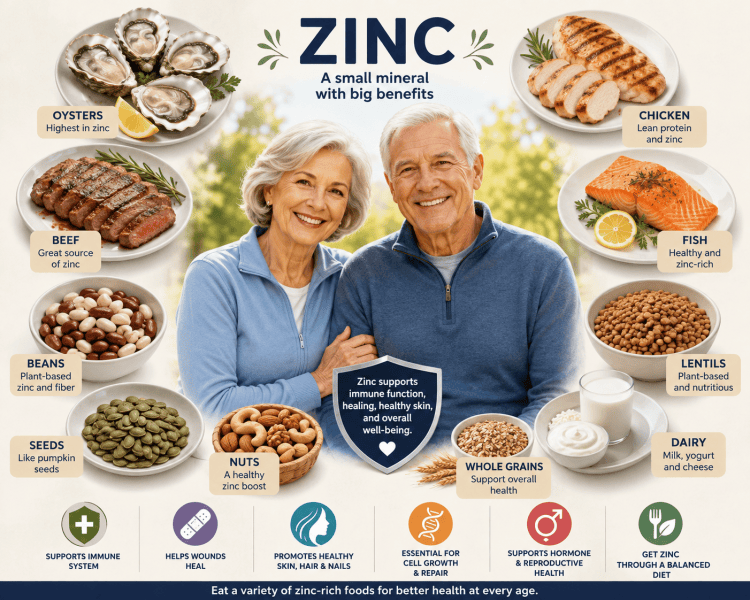
When people think about staying healthy, they often focus on vitamins such as Vitamin C or Vitamin D. But one important nutrient is often overlooked—**zinc**. Although the body needs only small amounts of it, zinc plays a surprisingly large role in keeping us healthy.
Zinc is involved in hundreds of chemical reactions in the body. It helps our immune system fight off infections, supports wound healing, and is essential for healthy skin. It also plays a role in making DNA and proteins, which means it is needed for growth, repair, and maintaining healthy cells throughout life.
As we grow older, getting enough zinc becomes even more important. Our immune system naturally becomes less effective with age, making us more vulnerable to infections such as pneumonia and the flu. Adequate zinc intake helps immune cells function properly, although it is not a cure or a guarantee against illness. Zinc also helps wounds heal more quickly, which can be especially valuable for older adults recovering from injuries or surgery.
For men, zinc is important for maintaining normal testosterone production and supporting prostate health. For women, zinc contributes to healthy skin, hair, and immune function and is especially important during pregnancy because it supports normal fetal development. In short, zinc is beneficial for both men and women throughout life.
The best way to get zinc is through a balanced diet. Good food sources include oysters, beef, chicken, pork, fish, eggs, dairy products, beans, lentils, nuts, seeds, and whole grains. People who eat very little meat or have digestive disorders may be at higher risk of zinc deficiency.
What happens if you don’t get enough zinc? Mild deficiency can lead to frequent infections, slow wound healing, poor appetite, reduced sense of taste or smell, hair loss, and skin problems. Severe deficiency is uncommon but can have more serious effects on growth and immunity.
Should everyone take zinc supplements? Not necessarily. Most people who eat a varied diet can get enough zinc from food. While supplements can help people with a confirmed deficiency or certain medical conditions, taking too much zinc over a long period can cause nausea, stomach upset, and even interfere with the body’s ability to absorb copper, leading to other health problems.
The bottom line is simple: zinc may be a “small” mineral, but it has a big impact on your health. Eating a balanced diet rich in zinc-containing foods is usually the best approach. If you think you may be deficient or are considering a supplement, it is wise to consult your healthcare provider first.
Taking care of your health isn’t just about the nutrients you notice—it’s also about the essential ones working quietly behind the scenes. Zinc is one of those unsung heroes.