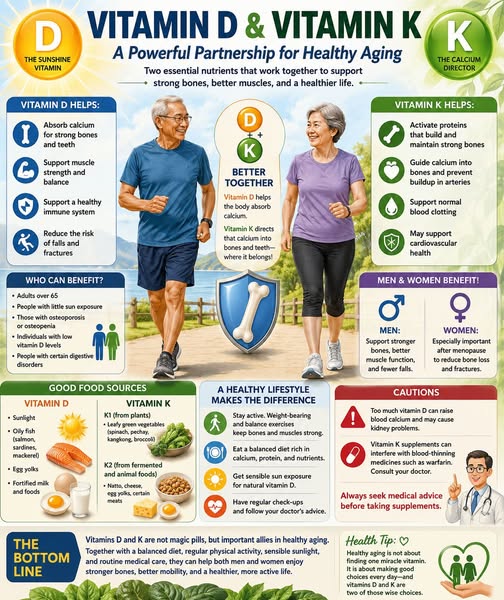
As we grow older, our bodies naturally change. Bones become thinner, muscles lose strength, and our risk of fractures increases. Fortunately, two essential nutrients—vitamin D and vitamin K—can play an important role in helping us stay healthy and active. They are not miracle cures, but together they form a powerful partnership for healthy aging.
Vitamin D is often called the “sunshine vitamin” because our skin produces it when exposed to sunlight. It helps the body absorb calcium, the mineral that gives our bones their strength. Without enough vitamin D, even a calcium-rich diet cannot do its job effectively.
For older adults, adequate vitamin D has several proven benefits. It helps maintain stronger bones, supports muscle function, and reduces the risk of falls and fractures. It also contributes to a healthy immune system. Many older people have low vitamin D levels because they spend less time outdoors or because aging skin produces less vitamin D from sunlight.
Vitamin K is less well known, but it is just as important. It helps activate proteins that guide calcium into our bones and teeth, where it belongs. Without enough vitamin K, some calcium may end up in places where it is not wanted, such as the walls of blood vessels.
Researchers believe that vitamins D and K work best as a team. Vitamin D helps the body absorb calcium, while vitamin K helps ensure that calcium is used properly. Together, they support stronger bones and may also contribute to healthier blood vessels.
What about men? Older men can benefit greatly from these vitamins because bone loss, muscle weakness, and fractures also become more common with age. While there has been interest in whether vitamin D boosts testosterone, research has not shown consistent benefits unless a man is deficient in vitamin D. The greatest proven benefits remain stronger bones, better muscle function, and fewer falls.
Women benefit just as much—if not more. After menopause, women lose bone more rapidly because of declining estrogen levels. Adequate vitamin D and vitamin K, together with calcium, regular exercise, and a healthy diet, can help reduce the risk of osteoporosis and broken bones.
The best sources of vitamin D include moderate sunlight exposure, oily fish such as salmon and sardines, egg yolks, and fortified milk. Vitamin K1 is abundant in green leafy vegetables such as spinach, kangkong, pechay, and broccoli. Vitamin K2 is found in fermented foods, some cheeses, eggs, and certain meats.
Should everyone take supplements? Not necessarily.
Many people can obtain enough of these vitamins through diet and lifestyle. However, older adults, people with osteoporosis, those who rarely go outdoors, or those found to have low vitamin D levels may benefit from supplements after consulting their healthcare provider.
One important caution: too much vitamin D can be harmful, and vitamin K supplements can interfere with blood-thinning medicines such as warfarin. Always seek medical advice before taking high-dose supplements.
The bottom line is simple: Vitamins D and K are not magic pills, but they are important allies in healthy aging. Combined with a balanced diet, regular physical activity, sensible sunlight exposure, and routine medical care, they can help both men and women enjoy stronger bones, better mobility, and a healthier, more active life.
Healthy aging is not about finding one miracle vitamin. It is about making good choices every day—and vitamins D and K are two of those wise choices.