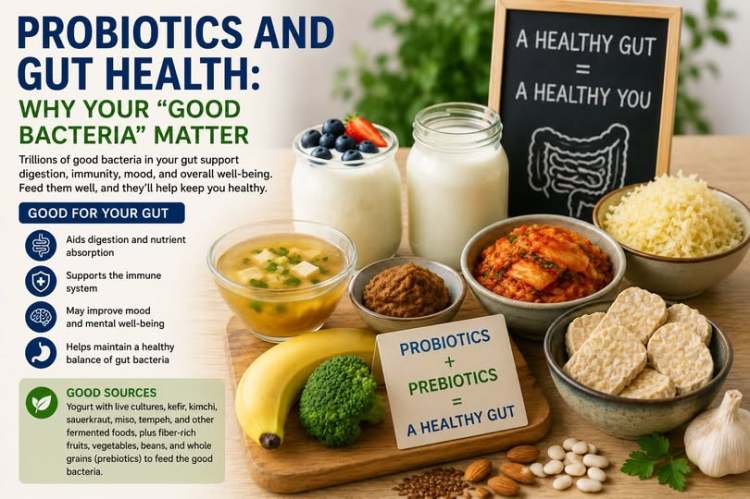
Did you know that trillions of tiny microorganisms live inside your digestive system? Collectively known as the gut microbiome, these bacteria, viruses, and fungi play an important role in keeping us healthy.
Fortunately, many of these microorganisms are beneficial. They help digest food, produce certain vitamins, support the immune system, and even influence our mood and overall well-being.
Probiotics are live beneficial bacteria that, when consumed in adequate amounts, can help maintain or restore a healthy balance in the gut. They are found naturally in fermented foods such as yogurt with live cultures, kefir, kimchi, sauerkraut, miso, and other fermented products. They are also available as dietary supplements.
Research suggests that probiotics can be helpful in certain situations. They may reduce the risk of diarrhea associated with antibiotics, shorten the duration of some infectious diarrheas, and ease symptoms of certain digestive disorders such as irritable bowel syndrome (IBS) in some people.
Scientists are also studying whether probiotics may benefit conditions such as allergies, obesity, and mental health, although the evidence is still developing.
It is important to remember that not all probiotics are the same. Different strains of bacteria have different effects, and a product that works well for one condition may not work for another. This is why choosing a probiotic should be based on good scientific evidence rather than advertising claims.
A healthy gut also depends on what you feed your beneficial bacteria. Foods rich in fiber, such as fruits, vegetables, beans, whole grains, and nuts, contain prebiotics—special types of fiber that nourish the good bacteria already living in your intestines. Think of probiotics as planting healthy seeds, while prebiotics provide the fertilizer that helps them grow.
While probiotics are generally safe for healthy people, they are not necessary for everyone. Many individuals can maintain a healthy gut simply by eating a balanced, fiber-rich diet and limiting highly processed foods.
People with severely weakened immune systems or certain serious illnesses should consult their healthcare provider before taking probiotic supplements.
The bottom line is this: a healthy gut contributes to a healthy body. Eating a variety of nutritious foods, including fiber-rich fruits and vegetables and fermented foods when appropriate, helps support the beneficial bacteria that work quietly every day to keep you well.
Good health starts from the inside. Taking care of your gut is one more step toward living a longer, healthier, and more active life.