When people think about staying healthy, they usually think of eating nutritious food, exercising regularly, or taking the right medicines. While these are all important, there is another powerful ingredient for good health that is often overlooked—our relationships with other people.
As we grow older, it is natural for our social circle to become smaller. Retirement, the loss of a spouse or close friends, children moving away, or health problems that limit mobility can all make it more difficult to stay connected. Yet research has shown that maintaining strong social connections can improve both physical and mental health.
People who enjoy regular contact with family, friends, and their community often experience lower levels of stress, less depression and anxiety, better memory, and a greater sense of purpose. They may also be more physically active and more likely to follow healthy habits.
Building social connections does not mean having hundreds of friends. Even a few meaningful relationships can make a tremendous difference.
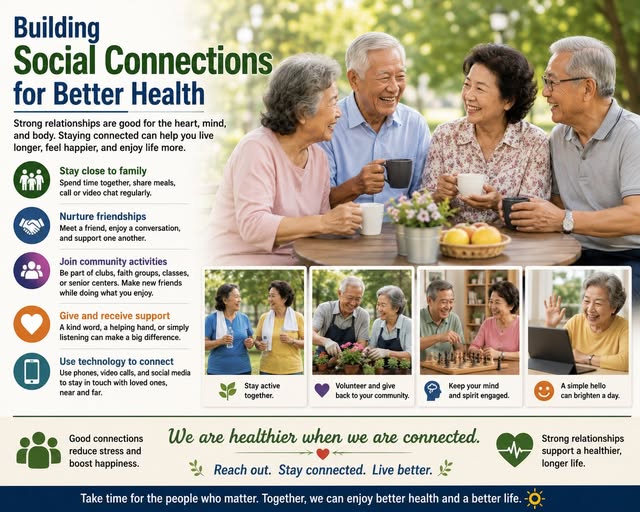
Start by making time for family. A shared meal, a phone call, or a video chat with children or grandchildren can brighten your day. If family members live far away, regular messages or online conversations can help maintain close bonds.
Friendships are equally valuable. Meet a friend for coffee, take a walk together, or simply spend time talking. Sometimes, a heartfelt conversation is one of the best medicines for the spirit.
Joining community activities is another excellent way to stay connected. Consider participating in church groups, senior citizens’ organizations, hobby clubs, volunteer work, or exercise classes. These activities provide opportunities to make new friends while staying mentally and physically active.
Technology can also help. Smartphones and video calls allow us to stay in touch with loved ones, even when they live in another city or another country. Learning to use these tools can open new doors to communication.
At the same time, remember that friendships require effort. Be willing to make the first phone call, send the first message, or invite someone for a visit. A simple act of kindness often leads to lasting relationships.
Finally, if you know someone who lives alone or has become socially isolated, reach out. A friendly visit, a shared meal, or even a few minutes of conversation can make a world of difference. Small gestures of kindness often have a lasting impact.
Good health is not measured only by blood pressure, cholesterol levels, or the medicines we take. It is also reflected in the warmth of our relationships and the support we give and receive from others.
We are healthier when we are connected. A smile, a conversation, or a helping hand may not only brighten someone’s day—it may also improve their health and enrich their life.