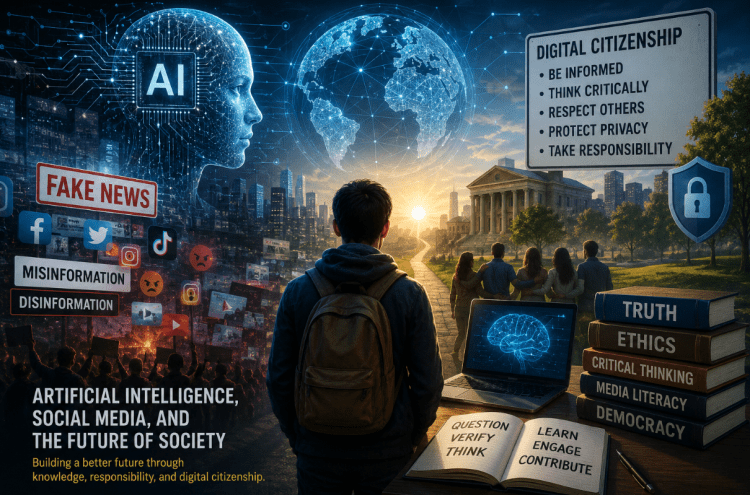
We are living through one of the most significant technological revolutions in human history. Artificial Intelligence, or AI, is rapidly transforming the way we communicate, learn, work, and make decisions. At the same time, social media has become one of the most powerful forces shaping public opinion, political discourse, and everyday life. Together, these technologies offer tremendous opportunities—but they also present serious challenges.
We need to explore the intersection of AI, social media, politics, and digital citizenship. We can begins by examining how technology has evolved from simple communication tools into complex systems capable of influencing what people see, believe, and share. Social media platforms have connected billions of people across the globe, creating unprecedented opportunities for learning, collaboration, and civic participation.
However, the same technologies that connect us can also divide us. Misinformation, disinformation, and manipulated content spread faster than ever before. AI-generated text, images, videos, and audio can make it increasingly difficult to distinguish fact from fiction. False information can influence elections, fuel social conflict, and undermine public trust in institutions.
Artificial intelligence is not inherently good or bad. Like any powerful tool, its impact depends on how it is used. AI can help doctors diagnose diseases, assist students in learning, improve business efficiency, and solve complex problems. Yet it can also be used to create deepfakes, automate propaganda, invade privacy, and reinforce harmful biases.
Under such circumstances, it is important to consider digital citizenship. In a world flooded with information, citizens must develop critical thinking skills. Rather than accepting every post, video, or headline at face value, people must learn to verify sources, question claims, and evaluate evidence. Responsible digital citizens understand that every click, share, and comment contributes to the larger information ecosystem.
We also need to look at the role of governments, technology companies, educators, journalists, and ordinary citizens in addressing the challenges created by emerging technologies. Regulation has a role to play, but laws alone cannot solve every problem. Ethical leadership, public awareness, media literacy, and personal responsibility are equally important.
Looking toward the future, I argue that artificial intelligence will continue to advance and become more deeply integrated into daily life. Many jobs will change, new industries will emerge, and society will face difficult questions about privacy, ethics, accountability, and human identity. Rather than fearing these changes, we should prepare for them by investing in education, promoting ethical innovation, and strengthening democratic institutions.
Let me conclude with a message of cautious optimism. Technology itself is neither our savior nor our enemy. The future will be shaped by the choices we make today. If we approach AI with wisdom, responsibility, and a commitment to truth, fairness, and human dignity, we can harness its benefits while minimizing its risks.
In the end, the future is not something that simply happens to us—it is something we build together. As artificial intelligence continues to evolve, our challenge is not merely to create smarter machines, but to become wiser citizens in an increasingly digital world.