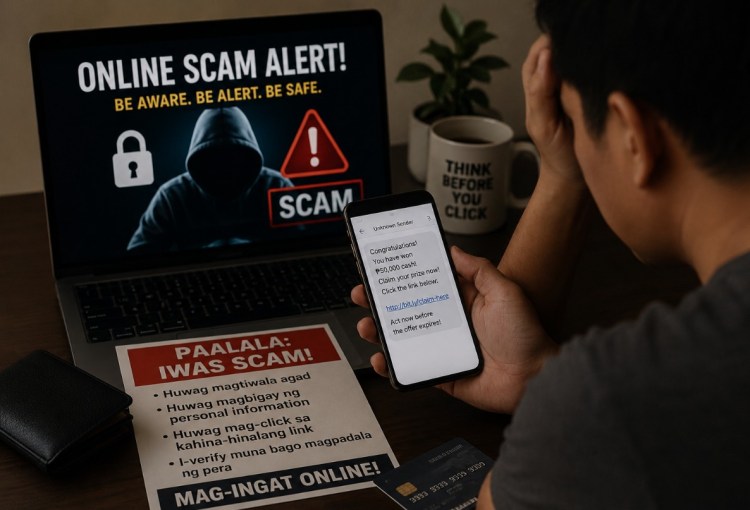
In the old days, thieves often wore masks and operated under the cover of darkness. Today, many thieves no longer need to hide in alleyways or break into homes. Armed with a smartphone, a laptop, and an internet connection, they can steal money, identities, and peace of mind from victims without ever leaving their rooms.
Online scammers have become a growing problem worldwide, and the Philippines is no exception. Every day, thousands of Filipinos receive suspicious text messages, social media offers, fake job opportunities, fraudulent investment schemes, and deceptive online selling advertisements. While technology has brought convenience and connected people in remarkable ways, it has also created new opportunities for criminals.
One of the most common scams in the Philippines involves fake online sellers. A buyer sees an attractive product on social media or an online marketplace. The price is often too good to resist. The buyer sends payment through a digital wallet or bank transfer, only to discover that the seller disappears afterward. The promised item never arrives.
Another common scam involves phishing. Victims receive messages that appear to come from legitimate banks, government agencies, delivery companies, or digital payment platforms. The message usually creates a sense of urgency: “Your account will be suspended,” or “Verify your account immediately.” A link is provided, leading to a fake website designed to capture passwords, account numbers, and personal information. Once the scammers obtain these details, they can access the victim’s accounts and steal funds.
Job scams have also become widespread. Many Filipinos searching for work online encounter offers promising high salaries for minimal effort. Some scammers ask applicants to pay “processing fees” or “training fees” before employment can begin. Others use fake recruitment schemes to collect personal information that can later be exploited.
Perhaps the most heartbreaking scams are those that prey on emotions. Romance scams target individuals seeking companionship. The scammer builds trust over weeks or months, often pretending to be a foreign professional, soldier, or successful entrepreneur. Once an emotional bond is established, an emergency suddenly arises. The victim is asked to send money. By the time the deception is discovered, significant financial and emotional damage may already have occurred.
Investment scams are equally dangerous. They often promise extraordinary returns with little or no risk. The scammers may display luxurious lifestyles, expensive cars, and stories of financial success. They encourage people to invest quickly before a supposed opportunity disappears. Unfortunately, many victims only realize the truth when withdrawals become impossible and the operators vanish.
Why do people fall for scams?
The answer is simple: scammers understand human nature. They exploit greed, fear, loneliness, urgency, and trust. They know that when people become excited about earning money, worried about losing access to an account, or hopeful about finding love, critical thinking can weaken.
It is important to remember that intelligence alone does not protect someone from fraud. Doctors, teachers, lawyers, business owners, and government officials have all fallen victim to sophisticated scams. Criminals continuously refine their methods, making their schemes increasingly convincing.
The good news is that there are practical ways to reduce the risk.
First, be skeptical of offers that seem too good to be true. If someone promises enormous profits with little effort or risk, caution is warranted.
Second, verify before you trust. Contact banks, government agencies, or companies through their official channels rather than relying on links provided in messages.
Third, never share passwords, one-time passwords (OTPs), PINs, or sensitive account information. Legitimate organizations rarely ask for these details through text messages, emails, or social media.
Fourth, research online sellers, employers, and investment opportunities before sending money. A few minutes of verification can prevent months of regret.
Fifth, discuss suspicious offers with family members or trusted friends. Scammers often rely on secrecy and pressure. A second opinion can reveal warning signs that may otherwise be overlooked.
Ultimately, the fight against online scams is not merely a technological challenge; it is a matter of awareness and vigilance. As criminals become more sophisticated, citizens must become more informed.
The internet has opened countless opportunities for learning, business, communication, and growth. It remains a powerful tool for good. However, just as we lock our doors at night and safeguard our wallets in crowded places, we must also protect ourselves in the digital world.
The old saying remains true: prevention is better than cure. In the age of online scams, a healthy dose of caution may be one of the most valuable forms of protection a person can have.
“Think before you click, verify before you trust, and pause before you pay.” Those simple habits can make the difference between becoming a victim and staying safe in an increasingly connected world.