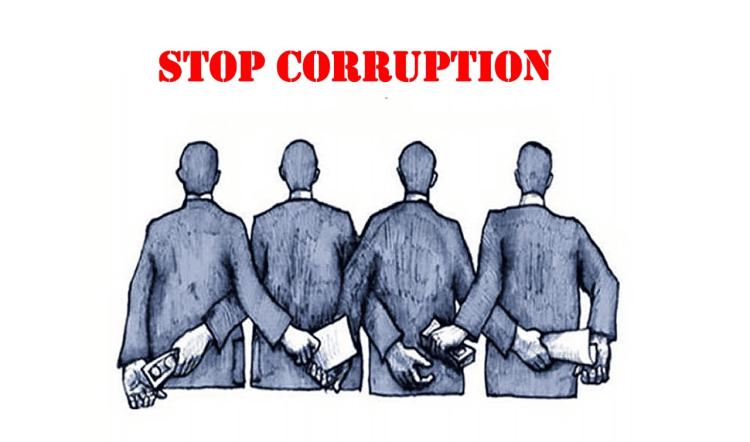
Corruption has existed for as long as governments have existed. Wherever power, money, and influence come together, there is always a risk that some officials will abuse their positions for personal gain. Yet while corruption is a common problem, countries around the world have responded to it in very different ways. Some have relied on strict laws and independent courts. Others have created powerful anti-corruption agencies. A few have used public transparency and citizen participation to reduce opportunities for wrongdoing.
Examining these approaches provides valuable lessons for any society seeking cleaner and more accountable government.
Singapore: Strict Enforcement and High Standards
One of the most frequently cited success stories is Singapore. Following independence in the 1960s, corruption was a serious concern. The government strengthened the powers of the Corrupt Practices Investigation Bureau (CPIB), an agency specifically tasked with investigating corruption at all levels of government.
Singapore combined strong enforcement with competitive salaries for public officials. The idea was simple: reduce the temptation for corruption while ensuring that anyone caught engaging in it faced severe consequences regardless of rank or status.
Today, Singapore consistently ranks among the least corrupt countries in the world.
Hong Kong: An Independent Anti-Corruption Agency
During the 1960s and early 1970s, corruption was widespread in Hong Kong, particularly within law enforcement. Public frustration eventually led to the creation of the Independent Commission Against Corruption (ICAC) in 1974.
The ICAC adopted a three-pronged strategy:
1. Investigation and prosecution of offenders.
2. Prevention by improving government procedures.
3. Public education to promote ethical behavior.
This combination proved highly effective and transformed Hong Kong into one of Asia’s leading examples of anti-corruption reform.
Nordic Countries: Transparency and Trust
Countries such as Denmark, Finland, and Sweden consistently rank among the world’s cleanest governments.
Rather than relying primarily on dramatic anti-corruption campaigns, these countries focus on prevention. Government records are often open to public scrutiny. Public procurement processes are transparent. Strong institutions, independent courts, free media, and active civil societies make it difficult for corruption to remain hidden.
In these countries, accountability is deeply embedded in the political culture.
South Korea: Holding Powerful Leaders Accountable
South Korea offers an example of a country willing to prosecute even its most powerful leaders.
Several former presidents have been investigated, convicted, or imprisoned for corruption-related offenses. These cases demonstrated that high office does not necessarily place an individual above the law.
While corruption challenges remain, such prosecutions send a powerful message that political influence does not guarantee immunity.
China: Large-Scale Anti-Corruption Campaigns
In recent years, China has conducted extensive anti-corruption campaigns targeting officials at multiple levels of government.
Thousands of officials have been investigated and disciplined. Supporters argue that these efforts have reduced corruption and increased public confidence. Critics, however, sometimes question whether anti-corruption campaigns can remain fully independent when conducted within highly centralized political systems.
China’s experience illustrates both the potential effectiveness and the challenges of large-scale government-led anti-corruption drives.
The United States: Independent Investigations and Checks and Balances
In the United States, corruption cases are typically addressed through law enforcement agencies, independent prosecutors, inspectors general, congressional oversight, investigative journalism, and the courts.
The system relies heavily on checks and balances. Multiple institutions monitor one another, making it more difficult for corruption to go undetected.
Major corruption scandals have led to the resignation, prosecution, or conviction of public officials at federal, state, and local levels.
Lessons for Developing Countries
Many developing nations continue to struggle with corruption despite having laws against it. Experience around the world suggests that anti-corruption efforts are most successful when several elements work together:
* Independent courts.
* Professional law enforcement.
* Transparent government procedures.
* Freedom of the press.
* Strong anti-corruption agencies.
* Protection for whistleblowers.
* Public participation and oversight.
No single solution eliminates corruption completely. Rather, success usually comes from creating systems that make corruption difficult, risky, and likely to be exposed.
The experiences of Singapore, Hong Kong, the Nordic countries, South Korea, China, and the United States demonstrate that corruption is not an impossible problem to address. While no country is entirely free from corruption, many have significantly reduced it through strong institutions, transparency, accountability, and consistent enforcement of the law.
Perhaps the most important lesson is that corruption declines when citizens believe that the law applies equally to everyone—from the lowest clerk to the highest official. When public office is treated as a public trust rather than a private opportunity, governments become stronger, economies grow healthier, and citizens gain greater confidence in their institutions.
In the end, fighting corruption is not merely about punishing wrongdoing. It is about building a culture where honesty, integrity, and public service are valued above personal gain.