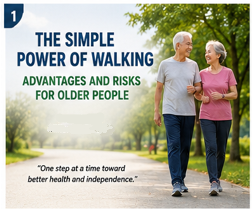
Walking is one of the most natural forms of exercise. It requires no expensive equipment, no gym membership, and no special athletic ability. For older people, walking can be one of the safest and most effective ways to maintain physical health, mental well-being, and independence. While it offers many benefits, it is also important to understand the potential risks and how they can be minimized.
Why Walking Matters More as We Age
As people grow older, the body naturally undergoes changes. Muscles lose strength, bones become less dense, balance may decline, and the heart and lungs may not function as efficiently as they once did. Regular walking can help slow many of these age-related changes.
Unlike strenuous sports, walking places relatively little stress on the body while still providing significant health benefits. It is often described as “medicine in motion.”
Physical Benefits of Walking
1. Improves Heart Health
Walking strengthens the heart and improves circulation. Regular walking can help lower blood pressure, reduce bad cholesterol levels, and decrease the risk of heart disease and stroke.
Even a brisk 30-minute walk most days of the week can make a meaningful difference in cardiovascular health.
2. Helps Control Weight
As metabolism slows with age, maintaining a healthy weight becomes more challenging. Walking burns calories and helps prevent excessive weight gain.
Being at a healthy weight can also reduce stress on the knees, hips, and lower back.
3. Strengthens Muscles and Bones
Walking helps maintain muscle tone, particularly in the legs and core. It also stimulates bones, helping reduce the risk of osteoporosis, a condition that causes bones to become weak and fragile.
Stronger muscles and bones contribute to greater mobility and independence.
4. Improves Balance and Reduces Falls
Regular walking can enhance coordination and balance. Older adults who walk consistently often develop better stability, reducing their risk of falling.
Since falls are a major cause of injury among seniors, this benefit alone is extremely important.
5. Helps Manage Chronic Diseases
Walking can help people manage conditions such as:
• Type 2 diabetes
• High blood pressure
• Arthritis
• Heart disease
• Mild obesity
Many doctors recommend walking as part of treatment plans for these conditions.
Mental and Emotional Benefits
1. Reduces Stress and Anxiety
Walking encourages the release of endorphins, sometimes called the body’s “feel-good” chemicals. These natural substances can improve mood and reduce feelings of stress.
A walk in a park or other natural setting may be especially calming.
2. Supports Brain Health
Research suggests that regular physical activity, including walking, may help maintain memory and cognitive function.
Some studies indicate that older adults who remain physically active may have a lower risk of cognitive decline and dementia.
3. Combats Loneliness
Walking with friends, family members, or community groups provides opportunities for social interaction.
For many older people, these social connections are just as valuable as the physical exercise itself.
4. Improves Sleep
Many seniors struggle with sleep problems. Regular daytime walking can help regulate sleep patterns, leading to deeper and more restful sleep at night.
The Importance of Independence
Perhaps one of the greatest benefits of walking is that it helps older adults maintain independence.
The ability to walk comfortably allows people to shop, visit friends, attend community activities, and perform everyday tasks without relying heavily on others.
Maintaining mobility often means maintaining dignity and quality of life.
Potential Risks of Walking
Although walking is generally safe, it is not completely risk-free.
1. Falls and Trips
Uneven sidewalks, loose gravel, wet surfaces, and poor lighting can increase the risk of falling.
A serious fall can lead to fractures, hospitalization, and a loss of confidence.
2. Overexertion
Some older adults may push themselves too hard, especially if they have not exercised regularly.
Warning signs include:
• Chest pain
• Severe shortness of breath
• Dizziness
• Extreme fatigue
These symptoms should never be ignored.
3. Joint Pain
People with arthritis or other joint conditions may experience discomfort if they walk too far or wear improper footwear.
However, moderate walking often helps reduce stiffness over time.
4. Heat and Dehydration
In tropical countries such as the Philippines, hot and humid weather can increase the risk of dehydration and heat exhaustion.
Older adults should walk during cooler hours, such as early morning or late afternoon, and drink sufficient water.
5. Traffic Hazards
Busy roads, distracted drivers, and poorly designed pedestrian areas can create dangers for walkers.
Using designated crossings and staying alert can significantly reduce these risks.
Safety Tips for Older Walkers
To maximize benefits and minimize risks:
• Start slowly and increase distance gradually.
• Wear comfortable, supportive walking shoes.
• Walk in well-lit, safe areas.
• Carry water, especially in warm weather.
• Use a walking stick or cane if balance is a concern.
• Walk with a companion when possible.
• Inform a family member of your route if walking alone.
• Consult a doctor before beginning a new exercise program, especially if you have heart or lung conditions.
Final Thought
Walking is one of the simplest yet most powerful activities available to older adults. It strengthens the heart, muscles, bones, and mind while helping preserve independence and quality of life. The risks associated with walking are generally manageable and can be greatly reduced through proper precautions.
The old saying, “Use it or lose it,” applies strongly to mobility. A daily walk may seem like a small habit, but over months and years it can contribute to a healthier body, a sharper mind, and a more active and fulfilling life.
For many older people, the path to better health is quite literally one step at a time.